
Get full access with a free account
Benefits of the Coloplast® Professional Educational platform
- Get full access to all educational content, events and resources
- Track your progress
- Share content with your collegues
- Share supporting material with your patient
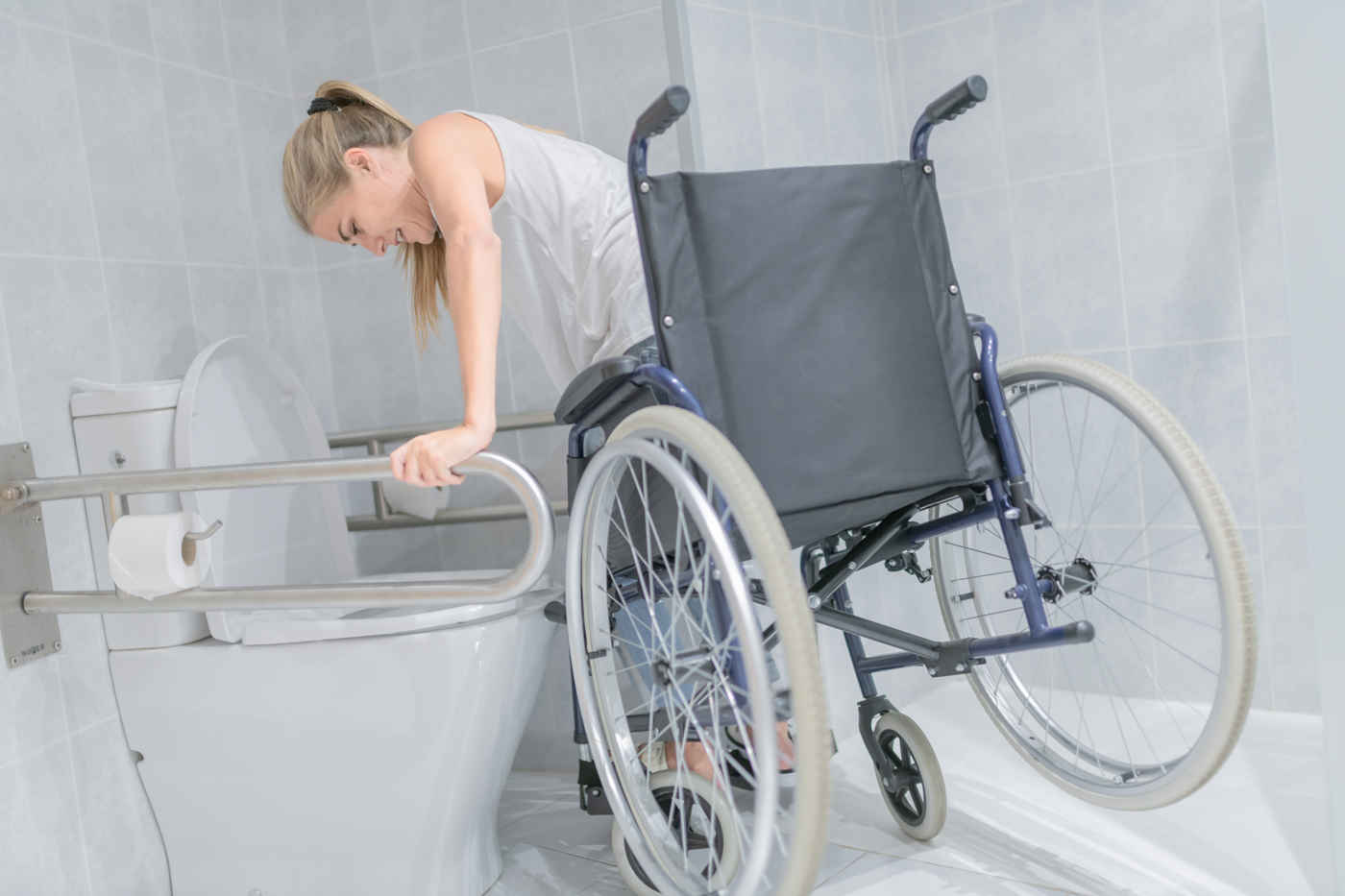
Minimising Unnecessary Transfers, Maximising Comfort
While the challenges posed by shoulder pain and falls in spinal cord injured (SCI) individuals are profound, they are not insurmountable. By prioritizing strategies to minimise unnecessary transfers, individuals can reclaim control over their mobility and reduce the toll on their shoulders.
Bladder management and reducing unnecessary transfers
- SCI individuals may require to perform 15 to 20 manual transfers per day.3
- About 1/3 are for bladder emptying/intermittent catheterisation into the toilet.4*
- This equates to about 38,000 transfers for bladder emptying alone across a lifetime.4**
*Based on EUMA guidelines, ** Calculated based on the EMUA guidelines and potential lifespan of a SCI patient
It is difficult for able-bodied people to appreciate the everyday stress on the shoulders, which bears the brunt during transfers. For every single one of these transfers that can be avoided, it would equate to a reduction in stress to the shoulders equivalent to 5-10 ‘push-ups’.5 That is a lot of strain on the shoulders avoided over a lifetime!
Healthcare providers can help to reduce the number of unnecessary transfers to the bathroom via the use of intermittent catheterization set solution.
Boost your knowledge: Insights from multidisciplinary healthcare professionals on why the bathroom is the greatest risk of falls
Why is the bathroom the greatest risk of falls?
Leigh Dunstan
Physiotherapist
Kwan Leung
Exercise Physiologist
References:
1. Barbareschi G, Holloway C. Disabil Rehabil: Assistive Technology 2020; 15(5): 545-552.
2. Marshall K et al. Spinal Cord 2023; 61: 57–64.
3. You JS et al. J Phys Ther Sci 2017; 29: 478-83.
4. Vahr S et al. EUMA 2013, p, 1-96.
5. Coulet B et al. Orthop Traumatol Surg Res 2022; 108(1S): 103170.
PM 34235